
verdant thermostat user manual
Welcome! This manual guides you through setup and operation of your Verdant Thermostat‚ simplifying home climate control. Enjoy effortless comfort and efficiency!
What is the Verdant Thermostat?
The Verdant Thermostat represents a significant advancement in home climate control technology‚ designed to seamlessly integrate into modern lifestyles. It’s more than just a temperature regulator; it’s a smart device engineered for optimal comfort‚ energy savings‚ and convenient control. Inspired by a commitment to simplifying daily life – much like Sodebo simplifies meal preparation – the Verdant Thermostat offers intuitive operation and advanced features.
This thermostat allows precise temperature management‚ adapting to your preferences and schedule. Like accessing exclusive benefits with a Sodebo & Moi account‚ the Verdant Thermostat unlocks a world of personalized climate settings. It’s built to deliver reliable performance‚ ensuring a consistently comfortable environment within your home‚ mirroring the dependability of services like SNDS access control.
Key Features and Benefits
The Verdant Thermostat boasts a suite of features designed for modern living. Enjoy remote control via smartphone‚ allowing adjustments from anywhere – a convenience akin to ordering Sodebo meals. Smart Scheduling learns your habits‚ optimizing energy use‚ and reducing costs. Geofencing automatically adjusts temperatures based on your location‚ mirroring the responsiveness of Outlook.com services.
Benefit from precise temperature control‚ ensuring consistent comfort. Integration with voice assistants (Alexa‚ Google Assistant) offers hands-free operation‚ like accessing SNDS IPs. The thermostat’s intuitive interface simplifies adjustments‚ and regular software updates‚ similar to ongoing Sodebo promotions‚ enhance functionality. Experience a smarter‚ more efficient‚ and comfortable home environment.
Package Contents
Your Verdant Thermostat package includes the following items‚ ensuring a smooth installation process‚ much like receiving a complete Sodebo pastabox. You will find one (1) Verdant Thermostat unit‚ carefully packaged for protection. Included are mounting screws and wall anchors for secure installation‚ similar to securing access to SNDS IPs.
A detailed installation guide‚ mirroring the clarity of Outlook.com support pages‚ is provided. Wire labels are included for simplified wiring‚ preventing confusion. A quick-start guide offers immediate setup instructions. Finally‚ you’ll receive a welcome card with warranty information and access to online resources‚ comparable to Sodebo & Moi benefits. Please verify all components are present before proceeding.

Installation Guide
Begin installation carefully! Follow these steps for a secure and efficient setup‚ ensuring optimal performance and long-lasting climate control within your home.
Safety Precautions
Important Safety Information: Before commencing installation‚ always disconnect power to your existing thermostat at the breaker panel. Failure to do so presents a serious risk of electrical shock. This device should only be installed by a qualified technician if you are unfamiliar with low-voltage wiring.
Do not install the thermostat in a location exposed to direct sunlight‚ extreme temperatures‚ or moisture. Ensure the mounting surface is stable and can support the thermostat’s weight. Improper installation can lead to malfunction or damage. Keep small parts away from children during installation.
Verify compatibility with your HVAC system before wiring. Incorrect wiring can damage both the thermostat and your heating/cooling equipment. If you encounter any difficulties‚ consult a professional HVAC technician. Always adhere to local electrical codes and regulations.
Wiring Diagram
Wiring Configuration: The Verdant Thermostat utilizes a standard 5-wire connection. Connect Rh to the heating power source‚ Rc to the cooling power source‚ W to the heating output‚ Y to the cooling output‚ and C to the common wire. Ensure proper wire labeling before connecting.
Important Note: If your system lacks a C-wire‚ a C-wire adapter may be required for optimal performance. Refer to the adapter’s instructions for correct installation. Incorrect wiring can damage your HVAC system. Double-check all connections before restoring power.
Color Coding: Typically‚ Red = 24VAC Power‚ White = Heat‚ Yellow = Cool‚ Green = Fan‚ Blue = Common. However‚ always verify with your existing thermostat’s wiring. A detailed diagram is also available on our website.
Mounting the Thermostat
Wall Preparation: Select a location away from direct sunlight‚ drafts‚ and heat-generating appliances. Ensure the wall is flat and dry. Remove your old thermostat’s mounting plate. Use the provided screws and anchors for secure installation. Leveling is crucial for accurate temperature readings.
Backplate Installation: Attach the Verdant Thermostat backplate to the wall using the screws. Ensure it’s firmly secured. Gently push any excess wiring back into the wall cavity.
Thermostat Attachment: Align the thermostat with the backplate and gently snap it into place. Verify a secure connection. If it doesn’t click‚ re-check the alignment.
Connecting to Power
Safety First: Before connecting power‚ always turn off the circuit breaker supplying power to your heating and cooling system. This prevents electrical shock and potential damage to the thermostat. Double-check with a non-contact voltage tester.
Wiring Verification: Carefully review the wiring diagram (see section 2.2) and confirm all wires are correctly connected to the corresponding terminals on the thermostat backplate. Incorrect wiring can cause system malfunction.
Power Activation: Once wiring is verified‚ restore power at the circuit breaker. The Verdant Thermostat should power on automatically. If it doesn’t‚ re-check the wiring and breaker.

Basic Operation
Effortless Control: Easily manage your home’s temperature with intuitive controls. Adjust settings directly on the thermostat’s responsive touchscreen interface.
Powering On/Off
Initial Power-Up: Upon initial installation and connection to a power source‚ the Verdant Thermostat will automatically power on and initiate its startup sequence. This process may take up to one minute as the system performs self-diagnostics and establishes network connectivity.
Manual Power On: If the thermostat appears to be off‚ ensure it is receiving power. If power is confirmed‚ briefly press the central button on the thermostat’s faceplate. This will activate the display and initiate the operating system.
Powering Down: To temporarily power off the thermostat‚ navigate to the ‘Settings’ menu via the touchscreen interface. Select the ‘Power’ option and confirm your selection. Note that powering off will disable all thermostat functions until powered on again. For extended periods of inactivity‚ consider utilizing the scheduling features to minimize energy consumption instead of completely powering down.
Display Overview
The Verdant Thermostat features a vibrant‚ full-color touchscreen display providing intuitive control and information. The primary area showcases the current room temperature prominently‚ alongside the setpoint temperature. Below this‚ you’ll find icons indicating the current operating mode (Heat‚ Cool‚ Auto‚ Off).
A status bar at the top displays Wi-Fi connectivity‚ time‚ and system status. Tapping the screen reveals a menu with options for scheduling‚ settings‚ and advanced features. A smaller section displays outdoor weather information when connected to Wi-Fi. The bottom of the screen features quick access buttons for temperature adjustment and mode selection‚ ensuring effortless operation.
Setting the Temperature
Adjusting the temperature with your Verdant Thermostat is simple. Use the up and down arrow buttons on the main display to increase or decrease the desired setpoint. Alternatively‚ directly tap the temperature display to access a numerical keypad for precise input. The thermostat will smoothly transition to the new setpoint‚ initiating heating or cooling as needed.
You can also set temporary temperature holds by adjusting the setpoint; this overrides scheduled programs until the next scheduled event. The display clearly indicates when a hold is active. Remember to consider energy-saving practices when selecting temperatures‚ optimizing comfort and reducing utility costs.
Operating Modes (Heat‚ Cool‚ Auto)
Your Verdant Thermostat offers three primary operating modes: Heat‚ Cool‚ and Auto. In Heat mode‚ the thermostat activates the heating system when the room temperature falls below the setpoint. Cool mode activates the cooling system when the temperature exceeds the setpoint.
Auto mode intelligently switches between heating and cooling to maintain your desired temperature‚ optimizing for comfort and efficiency. To select a mode‚ use the ‘Mode’ button on the thermostat or within the mobile app. The currently selected mode is prominently displayed on the main screen. Ensure the correct mode is selected for optimal performance and energy savings.

Advanced Features
Unlock full potential! Explore scheduling‚ geofencing‚ smart home integration‚ and energy-saving tips for a personalized and efficient climate control experience.
Scheduling Programs
Create Customized Comfort: The Verdant Thermostat allows you to establish personalized heating and cooling schedules tailored to your lifestyle. Program different temperatures for various times of the day and days of the week‚ optimizing both comfort and energy savings.
Easy Programming: Access the scheduling menu through the thermostat’s touchscreen interface or the mobile app. Define multiple periods – such as ‘Wake‚’ ‘Away‚’ ‘Return‚’ and ‘Sleep’ – each with a specific temperature setting.
Flexible Options: You can copy schedules to multiple days‚ create unique weekend settings‚ or even implement vacation modes to conserve energy while you’re away. The system supports up to seven different scheduling events per day‚ providing granular control over your home’s climate.
Geofencing Setup
Smart Home‚ Smarter Savings: Leverage the power of geofencing with your Verdant Thermostat! This feature automatically adjusts your home’s temperature based on your location‚ ensuring comfort when you’re near and saving energy when you’re away.
Simple Configuration: Using the mobile app‚ define a virtual “fence” around your home. When your smartphone enters or exits this zone‚ the thermostat responds accordingly. You can customize the radius of the geofence to suit your needs.
Personalized Responses: Set preferred temperatures for “Home” and “Away” modes. The thermostat will proactively pre-heat or pre-cool your home before your arrival‚ and automatically switch to energy-saving settings when you leave. Enjoy seamless comfort and reduced energy bills!
Smart Home Integration (e.g.‚ Alexa‚ Google Assistant)
Voice Control & Seamless Automation: The Verdant Thermostat integrates effortlessly with popular smart home ecosystems like Amazon Alexa and Google Assistant. Control your home’s temperature with simple voice commands – no more reaching for your phone or the thermostat itself!
Easy Setup: Enable the Verdant Thermostat skill or action within your Alexa or Google Home app. Follow the on-screen instructions to link your accounts. Once connected‚ you can adjust the temperature‚ switch modes‚ and even create routines.
Hands-Free Comfort: Imagine saying‚ “Alexa‚ set the thermostat to 72 degrees‚” or “Hey Google‚ what’s the temperature inside?” Enjoy ultimate convenience and a truly connected home experience!
Energy Saving Tips
Maximize Efficiency‚ Minimize Costs: The Verdant Thermostat empowers you to reduce energy consumption and lower your utility bills. Utilize scheduling programs to automatically adjust temperatures based on your daily routine – lower the heat while you’re away‚ and pre-cool before you arrive.
Smart Temperature Adjustments: Even small temperature adjustments can make a significant difference. Lowering your thermostat by a few degrees in winter and raising it in summer can yield substantial savings.
Leverage Geofencing: Enable geofencing to automatically adjust the temperature when you leave or approach home‚ ensuring energy isn’t wasted heating or cooling an empty house. Embrace a greener‚ more cost-effective lifestyle!

Troubleshooting
Resolve Common Issues: This section provides solutions for typical problems‚ including power failures‚ inaccurate readings‚ and connectivity disruptions. Find quick fixes here!
Thermostat Not Powering On
Problem: If your Verdant Thermostat fails to power on‚ begin by verifying the power source. Ensure the thermostat is securely connected to its power supply‚ checking both wiring connections and the circuit breaker. Confirm the breaker hasn’t tripped and is in the ‘on’ position.
Solutions: Next‚ inspect the wiring diagram (see Installation Guide) to confirm correct connections. If battery backup is present‚ ensure it’s not depleted and replace if necessary. A faulty power adapter could also be the culprit; try a different compatible adapter. If issues persist‚ disconnect the thermostat from power for five minutes‚ then reconnect. If still unresponsive‚ contact customer support for further assistance‚ providing your model number and a detailed description of the problem.
Incorrect Temperature Readings
Problem: If your Verdant Thermostat displays inaccurate temperature readings‚ several factors could be at play. External drafts‚ direct sunlight exposure‚ or proximity to heat-generating appliances can influence readings. The thermostat’s location significantly impacts accuracy; avoid placing it near windows‚ doors‚ or vents.
Solutions: First‚ ensure the thermostat is calibrated correctly within the settings menu. Check for obstructions blocking airflow around the device. Verify the thermostat isn’t installed on an exterior wall without proper insulation. If the problem continues‚ try resetting the thermostat to factory defaults; If inaccuracies persist after these steps‚ contact customer support‚ providing details about the observed discrepancies and your thermostat’s location.
Connectivity Issues
Problem: Experiencing difficulty connecting your Verdant Thermostat to your home Wi-Fi network? Connectivity problems can hinder remote control and access to smart features. Common causes include a weak Wi-Fi signal‚ incorrect network credentials‚ or interference from other devices.
Solutions: First‚ verify your Wi-Fi router is functioning correctly and broadcasting a strong signal. Double-check the entered Wi-Fi password within the thermostat’s settings. Try restarting both the thermostat and your router. Ensure the thermostat is within range of your Wi-Fi network. If issues persist‚ consult your router’s documentation or contact your internet service provider. For ongoing problems‚ contact Verdant support for assistance.
Error Codes and Meanings
Understanding Error Codes: The Verdant Thermostat utilizes error codes to diagnose potential issues. These codes provide valuable insights into the problem‚ aiding in troubleshooting. Ignoring error codes can lead to prolonged malfunctions and reduced efficiency.
Common Codes: E1: Power supply failure – check wiring. E2: Sensor malfunction – contact support. E3: Communication error – restart thermostat & router. E4: Heating/Cooling system issue – verify system operation. E5: Network connectivity lost – re-establish Wi-Fi. Refer to the complete error code list within the app or on our website for detailed explanations and recommended solutions. Contact Verdant support if an error persists after attempting troubleshooting.

Maintenance
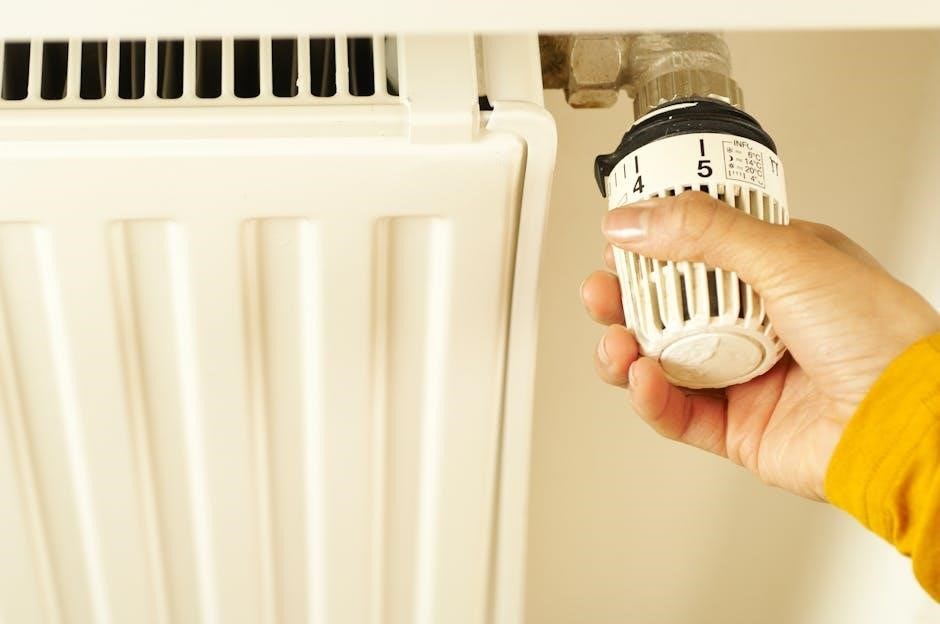
Keep it clean! Regularly wipe down the thermostat with a soft cloth. Ensure software is updated for optimal performance and security features.
Cleaning the Thermostat
Regular cleaning ensures optimal performance and longevity of your Verdant Thermostat. Before cleaning‚ always power off the thermostat to prevent electrical shock or damage. Use a soft‚ dry microfiber cloth to gently wipe the thermostat’s surface. Avoid abrasive cleaners‚ solvents‚ or excessive moisture‚ as these can harm the display and internal components.
For stubborn smudges‚ lightly dampen the cloth with water – never spray directly onto the thermostat. Pay attention to the area around the display and buttons‚ ensuring no dust or debris accumulates. Periodically‚ you can use a can of compressed air to carefully blow away dust from vents and crevices. This prevents buildup that could affect temperature sensing. Remember to power the thermostat back on after cleaning is complete.
Battery Replacement (if applicable)

Your Verdant Thermostat may utilize batteries for backup or primary power. If the thermostat displays a low battery warning‚ or ceases to function even with power connected‚ replacement is necessary. Locate the battery compartment – typically on the side or back of the unit. Carefully open the compartment and note the battery type required (usually AA or AAA).
Remove the old batteries‚ observing the correct polarity (+ and -). Insert new batteries of the same type‚ ensuring proper alignment. Close the battery compartment securely. The thermostat should now power on or resume normal operation. Dispose of used batteries responsibly‚ following local regulations. Note: Some models may not require battery replacement.
Software Updates
Maintaining up-to-date software is crucial for optimal Verdant Thermostat performance and security. Updates deliver new features‚ bug fixes‚ and enhanced compatibility. Your thermostat automatically checks for updates when connected to Wi-Fi. A notification will appear on the display if an update is available.
To initiate the update‚ follow the on-screen prompts. Do not interrupt the update process – this could damage the thermostat. The update may take several minutes to complete‚ during which the thermostat will restart. Once finished‚ your thermostat will automatically resume normal operation with the latest software. Regular updates ensure a seamless and secure smart home experience.

Technical Specifications
Detailed specifications include dimensions‚ power needs‚ temperature range‚ and wireless protocols‚ ensuring compatibility and optimal performance within your home environment.
Dimensions
The Verdant Thermostat boasts a sleek and modern design‚ carefully considered to complement any interior décor. Its overall dimensions are 4.7 inches in width‚ 3.9 inches in height‚ and 1.2 inches in depth. These compact measurements ensure a discreet yet noticeable presence on your wall.
The display screen itself measures 2.8 inches diagonally‚ providing clear and easily readable information. The thermostat’s housing is constructed from high-quality‚ durable materials‚ contributing to its robust build. Precise dimensions are crucial for ensuring proper fit and avoiding any installation complications.
Before installation‚ please verify that the designated mounting location offers sufficient space to accommodate these dimensions comfortably. Accurate measurements will guarantee a seamless integration into your home’s existing infrastructure.
Power Requirements
The Verdant Thermostat is designed for standard residential electrical systems. It operates on a 24VAC (Volts Alternating Current) power supply‚ commonly provided by your HVAC system’s control wiring. A stable power source is essential for reliable operation and accurate temperature regulation.
The thermostat’s power consumption is minimal‚ typically drawing less than 3 Watts during active operation. This energy efficiency contributes to reduced overall energy usage. It does not require a neutral wire for operation‚ simplifying installation in many homes.
Ensure your HVAC system provides a consistent 24VAC signal. Incorrect voltage can damage the thermostat. If you are unsure about your system’s power supply‚ consult a qualified HVAC technician before proceeding with installation.
Operating Temperature Range
The Verdant Thermostat is engineered to function reliably in a wide range of environmental conditions. Its optimal operating temperature range is between 32°F and 104°F (0°C and 40°C). Outside of this range‚ while the thermostat will likely still operate‚ accuracy may be affected.
Avoid exposing the thermostat to extreme temperatures‚ such as direct sunlight or proximity to heat sources‚ as this can impact sensor readings and potentially damage internal components. The thermostat is designed for indoor use only and should not be installed in areas with high humidity or moisture.
Consistent temperature monitoring is guaranteed within the specified range‚ ensuring accurate heating and cooling control for optimal comfort and energy savings. Proper placement is key to maximizing performance.
Wireless Communication Protocols
The Verdant Thermostat utilizes several robust wireless protocols for seamless connectivity. It primarily supports 2.4 GHz Wi-Fi (IEEE 802.11 b/g/n) for connection to your home network and remote access via the mobile app. Bluetooth 5.0 is also integrated‚ enabling direct communication during initial setup and for potential future features.
For smart home integration‚ the thermostat is compatible with Zigbee 3.0‚ allowing it to connect to a wider range of devices and hubs. These protocols ensure secure and reliable data transmission‚ minimizing interference and maximizing range.
Regular firmware updates will continue to optimize wireless performance and add support for emerging standards‚ guaranteeing a future-proof experience.

Warranty Information
Enjoy peace of mind! The Verdant Thermostat comes with a one-year limited warranty covering defects in materials and workmanship. See details inside.
Warranty Period
The Verdant Thermostat is covered by a comprehensive warranty‚ designed to protect your investment and ensure long-term satisfaction. This warranty extends for a period of one (1) year‚ commencing from the original date of purchase as indicated on your proof of purchase – be sure to retain this document! During this period‚ Verdant will‚ at its sole discretion‚ repair or replace any product found to be defective in materials or workmanship under normal use and conditions.
This warranty provides coverage against manufacturing flaws and malfunctions occurring during typical operation. It does not cover damage resulting from misuse‚ abuse‚ improper installation‚ unauthorized modifications‚ acts of nature‚ or failure to follow the instructions outlined in this user manual. Warranty claims must be submitted with valid proof of purchase.
Coverage Details
Our warranty covers defects in materials and workmanship under normal residential use. This includes issues with the thermostat’s functionality‚ such as inaccurate temperature readings‚ failure to connect to Wi-Fi‚ or problems with scheduling programs. We will cover the cost of parts and labor necessary to repair or replace the defective unit.
However‚ the warranty does not extend to consequential damages‚ including but not limited to‚ heating or cooling costs incurred due to a malfunctioning thermostat. Installation and removal costs are also the responsibility of the purchaser. Damage caused by power surges‚ improper voltage‚ or unauthorized repairs voids the warranty.
How to Claim Warranty
To initiate a warranty claim‚ please visit our website at [insert website address here] and complete the online warranty claim form. You will need your proof of purchase (receipt or invoice) and the thermostat’s serial number‚ located on the back of the unit.
Our customer support team will review your claim and contact you within 5 business days to provide further instructions. You may be asked to provide photos or videos demonstrating the defect.
Approved claims will receive a Return Merchandise Authorization (RMA) number and instructions for shipping the defective unit back to us. Shipping costs for the return are the responsibility of the customer.